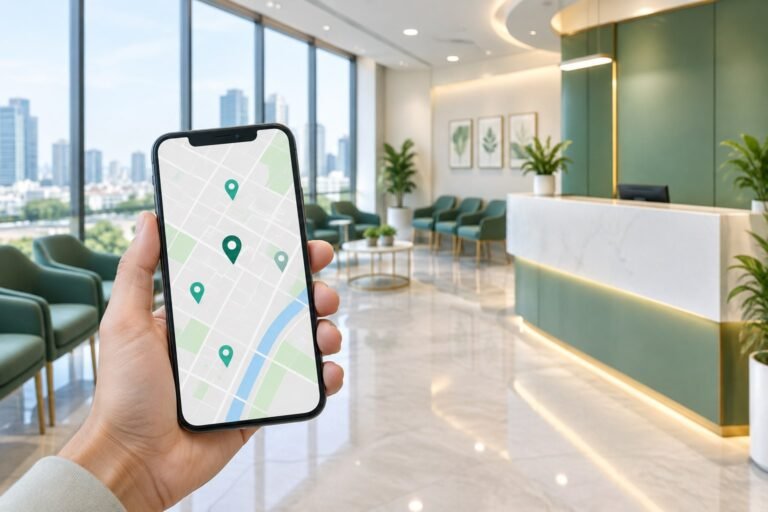
Digital marketing for lead generation is the process of identifying, attracting, and capturing potential customers who fit your target profile and show interest in your product or service. A lead is more than a message or phone call: it’s a potential customer whose needs and intent make them relevant to your business.
In practice, lead generation connects marketing activity to revenue. It turns visibility into qualified prospects and, eventually, customers. Without a clear strategy, marketing can generate attention without creating meaningful growth.

What Is Digital Marketing for Lead Generation?
Digital marketing for lead generation uses online channels and conversion systems to attract potential customers, capture their details, and guide them toward a purchase or inquiry.
A typical system includes:
- Paid ads and organic content
- A landing page or inquiry form
- Tracking and analytics
- Lead qualification
- Follow-up and nurturing
Unlike many traditional campaigns, digital campaigns can be targeted, measured, and improved over time. This makes them valuable for Dubai businesses in sectors such as healthcare, education, and professional services.
Also Read – Choosing the Right Dental Marketing Company for Your Practice
How Lead Funnels Work
A lead funnel describes the steps a potential customer takes from first discovering a business to becoming a customer.
1. Awareness: The person sees an ad, search result, social post, or referral.
2. Consideration: They visit your website, read your content, or compare options.
3. Conversion: They submit a form, call, book an appointment, or request a quote.
4. Qualification: Your team checks whether the lead fits your target profile and has a genuine need.
5. Nurturing and sales: Follow-up helps the prospect make an informed decision.
A funnel helps identify where prospects drop off. For example, lots of ad clicks but few inquiries may point to a weak landing page, unclear offer, or mismatch between the ad and the page.
MQLs and SQLs: What’s the Difference?
A Marketing Qualified Lead (MQL) has shown interest and appears to fit your target audience but may not be ready to speak with sales. Examples include someone who downloads a guide, signs up for a webinar, or requests information.
A Sales Qualified Lead (SQL) has been reviewed and is considered ready for direct sales follow-up. They may have a clear need, suitable budget, decision-making authority, or a near-term timeline.
The exact criteria should be agreed upon by marketing and sales. For example, a clinic might treat a relevant appointment request as an SQL, while a general health-content download is an MQL. Clear definitions help teams prioritize follow-up and assess campaign performance fairly.
Lead Generation Channels

The right channels depend on your audience, offer, and buying journey.
Paid channels
- Google Ads: Reaches people actively searching for a product or service.
- Meta Ads: Uses Facebook and Instagram to reach audiences based on interests and behavior.
- LinkedIn Ads: Can support B2B lead generation and professional targeting.
- TikTok and Snapchat Ads: May help reach specific consumer audiences, depending on the industry and creative approach.
Paid campaigns can generate inquiries quickly, but they need careful targeting, budget management, and conversion optimization.
Organic channels
- SEO and content marketing: Attracts people searching for relevant information or services.
- Google Business Profile: Supports local discovery and inquiries.
- Social media: Builds awareness, engagement, and trust over time.
- Email marketing: Nurtures existing contacts and encourages them to take the next step.
Organic lead generation usually takes longer to build, but it can strengthen visibility and support long-term demand.
Many businesses combine paid and organic activity to balance immediate reach with sustainable growth.
What Is CPL?
Cost per lead (CPL) is the amount spent to generate one lead.
Formula
CPL = Total campaign spend ÷ Number of leads generated
For example, if a campaign spends AED 5,000 and generates 50 leads, its CPL is AED 100.
CPL is useful, but it should not be assessed on its own. A low CPL may come with poor-fit enquiries, while a higher CPL may be worthwhile if more leads become customers. Compare CPL alongside lead quality, conversion rates, and revenue.
Cost per Lead Benchmarks by Industry
A cost per lead only means something when you compare it with your industry. These are median figures from the 2026 Google Ads Benchmarks report by WordStream and LocaliQ, covering 13,474 US search campaigns from April 2025 to March 2026. Dubai costs vary by season and competition, but the order of cheap and expensive industries is similar.
| Industry | CTR | Cost per click | Conversion rate | Cost per lead |
|---|---|---|---|---|
| Beauty and personal care | 6.75% | USD 4.62 | 10.35% | USD 39.25 |
| Physicians and surgeons | 6.61% | USD 4.76 | 12.43% | USD 40.04 |
| Dentists and dental services | 5.66% | USD 8.00 | 10.67% | USD 72.97 |
| Education and instruction | 7.56% | USD 4.81 | 13.14% | USD 77.48 |
| Home and home improvement | 6.47% | USD 8.33 | 8.05% | USD 90.92 |
| Real estate | 7.61% | USD 3.22 | 3.70% | USD 102.51 |
| Legal services | 5.87% | USD 9.87 | 5.55% | USD 131.63 |
Speed changes these numbers too. Research published in Harvard Business Review found that companies contacting a lead within an hour were nearly seven times more likely to qualify it than those that waited longer. A fast WhatsApp reply can lower your real cost per qualified lead without touching the ad budget.
Lead Quality: More Than a Form Submission
Lead quality measures how well a lead matches your business and how likely they are to become a customer. Useful criteria may include:
- Fit with your target audience and service area
- Genuine need or interest
- Budget and ability to purchase
- Decision-making role
- Readiness and timing
- Valid contact details and responsiveness
Track what happens after the inquiry, not just how many inquiries arrive. Feedback from sales or customer-facing teams can reveal which campaigns are generating relevant prospects.
Attribution: Understanding What Drove the Lead
Attribution is the process of connecting a lead or sale to the marketing touchpoints that influenced it. A prospect might first discover a business through a social post, later search for it on Google, and then submit a form after clicking an ad.
Attribution can be difficult because customers often interact with multiple channels before converting. Use tracking tools, consistent campaign tagging, call tracking where appropriate, and CRM records to build a clearer picture. Treat attribution as a useful guide rather than perfect proof, and compare it with sales outcomes.
Why Lead Generation Often Fails
Common problems include:
- Running ads without a clear funnel
- Sending traffic to a confusing or slow landing page
- Prioritizing cheap leads over relevant leads
- Failing to follow up promptly
- Not nurturing prospects who are not ready to buy
- Reviewing clicks and impressions but not sales outcomes
- Making decisions without reliable tracking
Lead generation is not simply about clicks. It requires a connected system from first contact through to follow-up and conversion.
Skills and Tools That Support Lead Generation
Effective campaigns bring together content writing, SEO, paid-media management, analytics, local targeting, conversion optimization, and lead nurturing.
Tools can support this work through:
- Website and campaign analytics
- Advertising-platform reporting
- CRM and lead-management systems
- Form and call tracking
- Email automation and follow-up
- Landing-page testing
Tools help with execution and measurement; they do not replace a clear strategy or a shared definition of a qualified lead.
Also read: 10 Things to Consider Before Hiring an SEO Agency in Dubai*
Lead Generation Process: Step by Step
1. Research the market, audience, and competitors.
2. Set goals and define MQL and SQL criteria.
3. Choose channels based on audience behavior and search intent.
4. Build a funnel, offer, and landing page.
5. Launch campaigns and ensure tracking is in place.
6. Qualify and follow up with leads promptly.
7. Review lead quality, CPL, and sales outcomes.
8. Improve the campaign and scale what works.
This process applies to both B2B and B2C campaigns, though the channels, qualification criteria, and sales cycle may differ.
How Long Does Lead Generation Take?
Timelines vary by industry, competition, budget, and offer. Paid campaigns may show early performance patterns within a few weeks, while SEO and other organic efforts often take several months to build meaningful results. A combination of paid and organic activity can balance short-term testing with longer-term growth.
What Influences Lead Generation Cost in Dubai?
There is no single fixed price. Costs can depend on:
- Location and service area
- Industry competition
- Audience and targeting requirements
- Advertising platforms
- Offer and conversion rate
- Lead-quality expectations
- Follow-up and sales processes
A realistic budget should reflect business goals and the value of a qualified customer, not just the lowest possible CPL.
The Role of AI in Digital Marketing for Lead Generation
AI can support audience analysis, bidding, personalization, and forecasting. It can help teams identify patterns and make faster decisions, but it does not replace human judgment. Messaging, trust, positioning, and lead qualification still require an understanding of the customer and the business.
Why Dubai Businesses Need a Structured Approach
Dubai’s market is diverse and competitive, and customer expectations vary across industries and audiences. Businesses need campaigns that account for local behavior, relevant languages, service areas, and applicable industry requirements, not generic tactics.
A structured approach helps connect channels, funnels, lead quality, and sales outcomes. That is what turns digital marketing activity into measurable business growth.
FAQs
What is lead generation in simple terms?
Lead generation is the process of attracting people who show interest in your service and collecting their details so you can start a business conversation. It focuses on relevance and intent, not random traffic.
How does lead generation help doctors in Dubai?
It connects clinics with patients actively searching for treatments, supports trust through education, and ensures marketing budgets focus on qualified inquiries instead of general visibility.
What is the difference between B2B and B2C lead generation?
B2B focuses on decision-makers and longer sales cycles, while B2C targets individuals with faster decisions. Both require different messaging, funnels, and lead nurturing approaches.
Are lead generation companies in Dubai reliable?
Reliability depends on transparency, data usage, and process clarity. A professional digital marketing for lead generation Dubai will explain strategy, timelines, and expectations clearly.
How long does lead generation take to work?
Paid campaigns show patterns within weeks. Organic strategies need months. Sustainable results come from consistency, testing, and optimization.
sinesses compete efficiently by focusing on relevance instead of reach.
Final Note
Lead generation is not about tricks. It is about clarity, structure, and consistency.
Also Read – Strategies for Optimizing Your Website for Voice Search to Stay Ahead of the Trend