A friend of mine left her salon job last year to open her own training school. Her first question wasn’t about branding or logos. It was, “Where do I even begin?” That’s really the question behind how to start a beauty training academy UK founders keep circling back to, and there isn’t one tidy answer. There’s a sequence: legal groundwork, accreditation, curriculum, premises, people, and marketing. Skip a step early and it costs you months later, usually right when you can least afford the delay.
Every academy founder I’ve spoken to goes through this, some who built something that lasted and some who quietly closed within a year, to notice a pattern. The difference rarely comes down to talent in the treatment room. It comes down to how well the groundwork was laid before the first student ever walked in.
Realistic Timeline
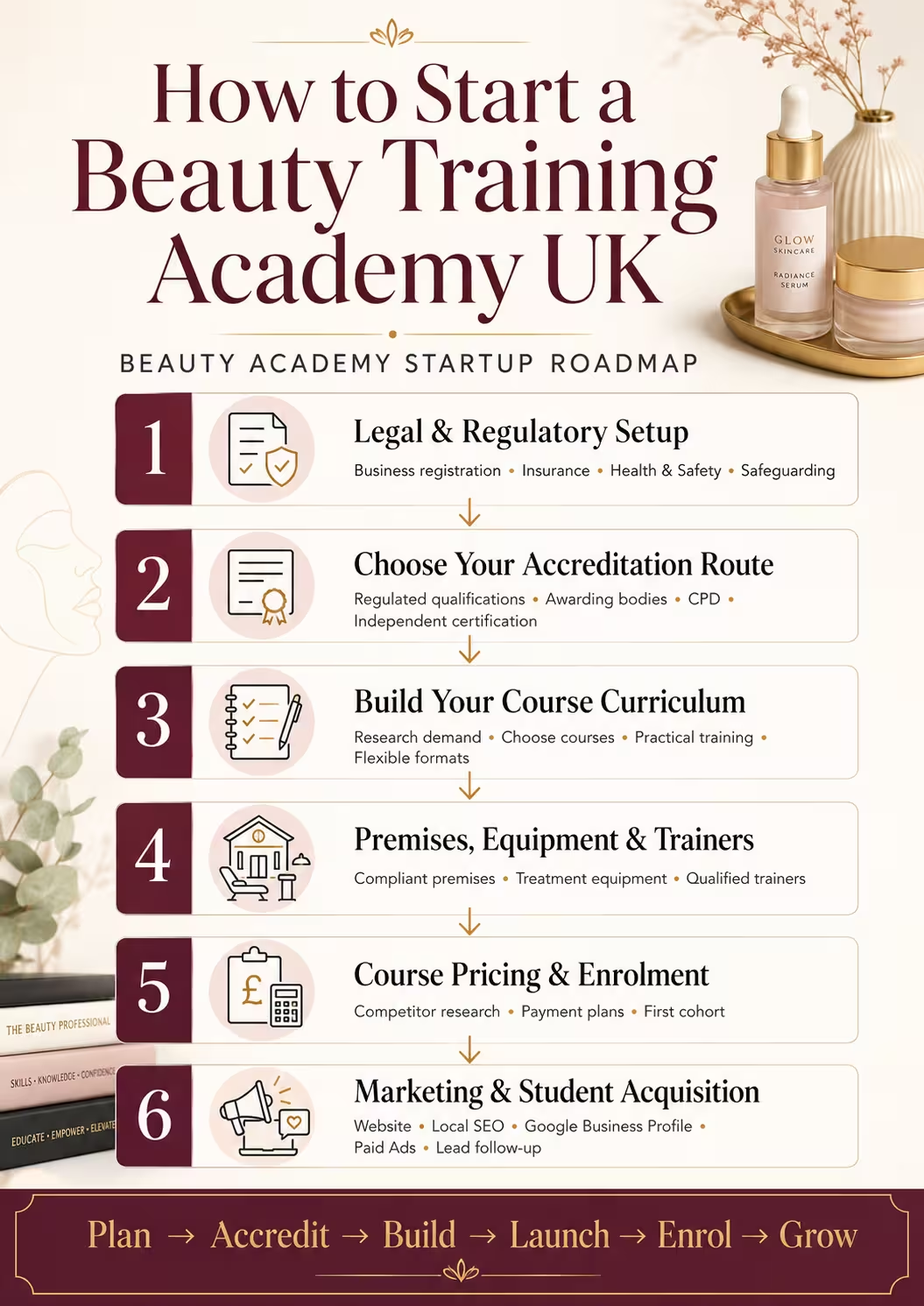
Many founders should plan for several months rather than a few weeks from your first legal steps to opening day. Accreditation approval alone can take several months, and premises fit-out, staff recruitment and marketing setup tend to run in parallel rather than one after another. Founders who move faster than that usually do it by starting with a smaller course offering and a single accreditation route, then expanding once the doors are open.
Why the UK Beauty Training Market Still Makes Sense
Before the how, the why is worth ten minutes of your time.
Despite a genuinely difficult few years for household budgets, the beauty sector has kept proving that people don’t cut brows, lashes and skincare the way they cut other spending. The British Beauty Council’s Value of Beauty 2026 report, compiled by Oxford Economics, put the industry’s contribution to the UK economy at £28.3 billion in 2025, with total industry-supported employment projected to climb to around 609,000 jobs in 2026. That’s a sector still standing on solid ground even as individual businesses feel real cost pressure.
That demand doesn’t stay put with salons either. It moves upstream: more salons hiring means more people looking for somewhere to train.
A few things stand out if you’re weighing whether now is the right time to get a beauty academy off the ground:
- Demand for practical, hands-on training has kept climbing, driven partly by the rise of semi-permanent and injectable treatments
- Career changers, not just school leavers, make up a large and largely untapped chunk of the enrolment pool
- Plenty of existing academies are still running on outdated websites and thin digital presence, which leaves real space for a sharper, better-marketed competitor to walk in and take market share
Step 1: Get the Legal and Regulatory Groundwork Sorted First
This is the step people rush through, and it’s the one that comes back to bite them six months in. If you’re serious about starting a beauty academy in the UK that regulators will actually sign off on, treat this as the real first step rather than admin to handle later.
Core UK Beauty Academy Requirements at a Glance
At minimum, you’ll need to work through:
- Business registration: deciding between sole trader, partnership or limited company, then registering with HMRC (self-employment registration is free) or Companies House (digital incorporation currently costs £100, plus £50 a year for your confirmation statement)
- Public liability and professional indemnity insurance, which becomes non-negotiable the moment real students start performing treatments on real paying clients
- Health and safety compliance, including proper risk assessments for any practical treatment rooms
- Safeguarding policies, particularly if you train under-18s or vulnerable adults, plus the appropriate DBS checks for roles that are legally eligible for them.
- Check whether you need to register and pay the ICO data protection fee. Most businesses processing personal information need to pay unless an exemption applies.
None of this is exciting. But it’s the part that holds everything else up. Every academy founder I’ve spoken to who got this right early said the same thing: it felt like slow, boring admin at the time, and it saved them a serious headache later.
What This Actually Costs
Companies House fees are fixed and public. Most of the other costs below depend heavily on your region, your course mix and the awarding body you choose, so treat this as a planning checklist rather than a quote. Get direct figures from your chosen awarding body and insurer before you commit to an opening date.
| Cost area | What it depends on |
| Business registration | Free for sole traders; from £100 for a limited company (Companies House digital incorporation) |
| Insurance | Number of trainers, treatment types offered, footfall |
| Premises fit-out | Location, size, whether you lease a fitted or bare space |
| Accreditation application | Awarding body chosen, number of qualifications, audit requirements |
| Equipment | Number of courses running, and whether treatment beds and sterilisation kit are new or refurbished |
| Trainer pay | Experience level, and whether trainers are full-time or freelance |
| Marketing setup | Website build, local SEO work, ad spend |
Step 2: Pick Your Accreditation Route
This decision shapes almost everything downstream: your credibility, your fees, and who’s even eligible to enrol with you.
| Accreditation type | Best for | Typical recognition | Setup effort |
| Regulated qualifications delivered through an approved awarding-body centre | Academies wanting formal, nationally recognised certificates | High, recognised by employers and insurers across the UK | High, involves audits and set curriculum standards |
| Awarding body-endorsed courses | Academies wanting credibility without full regulation | Medium to high | Medium |
| CPD-accredited short courses | Academies focused on upskilling already-qualified professionals | Medium | Low to medium |
| Independent or in-house certification | New academies building a brand from the ground up | Low at first, grows with reputation over time | Low |
If you’re still working out how to start a beauty training academy UK employers would actually respect on a CV, I’d lean toward at least one Ofqual-regulated pathway alongside your own branded short courses. That combination gives you weight for job-focused students and flexibility for hobbyists or professionals topping up existing skills.
On the paperwork side, expect awarding bodies to ask for a centre application form, evidence of your premises and equipment, CVs and qualification certificates for your trainers and assessors, a quality assurance policy, and a safeguarding policy if you’ll train under-18s. Most bodies also require an internal quality assurer separate from your assessor, so factor that into your hiring plan early rather than discovering it mid-application.
Step 3: Build a Curriculum That Reflects Real Demand
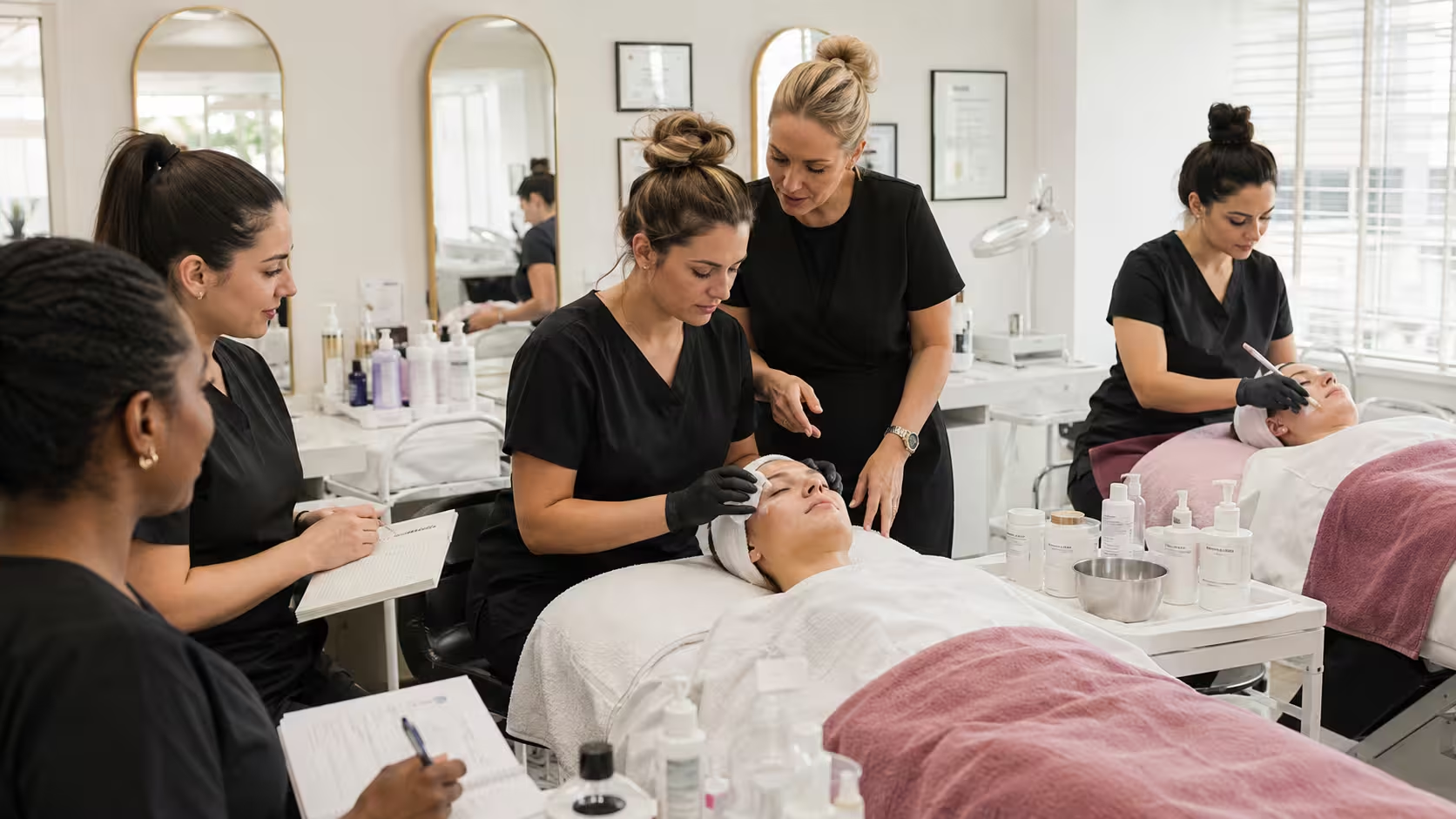
I’ve seen founders build a beautiful website around a curriculum nobody actually asked for. Don’t do that. Before you lock in your course list, look at what salons in your area are hiring for right now. Lash extensions, semi-permanent makeup and advanced facial treatments are worth researching locally. Advanced aesthetics and injectable courses may also attract demand, but providers should check the latest qualification, insurance and licensing requirements before offering higher-risk procedures.
From day one, it’s worth building the following into how you structure your courses:
- Modular courses so students can stack qualifications over time instead of committing to one large programme upfront
- A business and client-management module, since most new therapists fail commercially long before they fail technically
- Both fast-track and part-time formats, because your audience spans full-time career switchers and working parents fitting training around a job
- Supervised practical hours on real clients rather than mannequins alone, since that’s what employers actually want to see on a CV
Step 4: Sort Premises, Equipment, and Staffing
This is where budgets get real fast. Rent, insurance, treatment beds, sterilisation equipment, and qualified trainers add up quickly, and it’s easy to underestimate the total by a wide margin.
On premises: opening a beauty training school doesn’t require a flagship location on day one. A well-fitted, compliant space in a decent footfall area usually outperforms an expensive unit you can’t fill for the first year.
On staffing: your trainers are your product. A qualified, personable trainer with genuine industry experience will do more for your reputation than any marketing budget. Trainers should hold relevant vocational qualifications in the treatments they teach, ideally alongside a teaching or assessing qualification such as a Level 3 Award in Education and Training. I’d rather see a founder push back their opening date by two months to hire the right trainer than launch with someone mediocre just to hit a target date on a spreadsheet.
On equipment: buy for the courses you’re actually running first. Expanding your equipment list as you add courses is far more sustainable than sinking money into kit before you’ve enrolled a single student.
Step 5: Price Your Courses With Some Sense
Pricing trips up almost everyone setting up a beauty training business. Newcomers tend to underprice, usually out of nerves. Cheap pricing doesn’t pull in more students. It pulls in price-sensitive students who churn fast, complain often, and rarely refer anyone their way.
Instead, try this:
- Research three to five direct competitors in your region and price around the middle rather than the bottom
- Offer payment plans instead of blanket discounts, since this removes the affordability barrier without devaluing the qualification itself
- Save real discounts for early-bird cohorts or referral schemes, not as a permanent fixture of your pricing
Step 6: Build an Enrolment and Marketing Engine
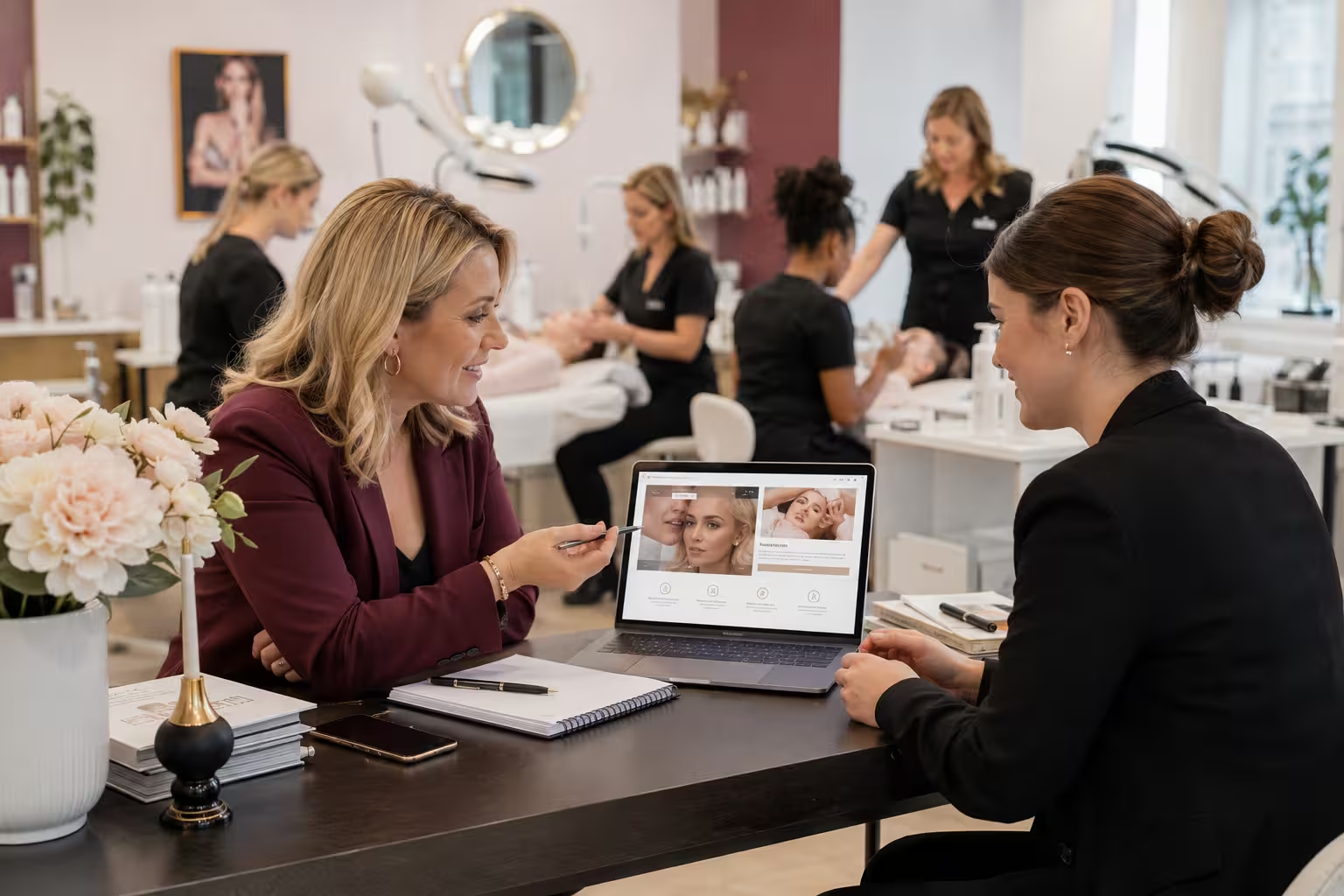
Once the operational side is solid, marketing is what actually fills your seats. This is where most academies fail quietly, and rarely because the training itself is bad. It’s because the right students never heard about them in the first place.
When you’re launching your own training school, treat marketing as a system rather than a one-off task:
- A clear, mobile-friendly website with a dedicated page per course rather than one vague “courses” page
- Local SEO so you show up when someone searches your course type plus your city
- A Google Business Profile with real reviews, real photos, and prompt replies to enquiries
- Social media built around real student work and real trainers rather than stock photography
- Paid ads split by course category, so a lash course enquiry lands on a lash course page instead of a generic homepage
- A fast follow-up process, since leads who wait more than a few hours often enrol somewhere else entirely
The course-category point is worth dwelling on. An academy that sends its lash-extension ads to a dedicated lash course page, rather than a general course listing, gives that prospective student exactly what they searched for the moment they land. Send the same click to a generic homepage and you’re asking them to do the work of finding the right course themselves, which is exactly where enquiries quietly drop off.
Mistakes Worth Genuinely Avoiding
- Skipping insurance or safeguarding checks to save time early on
- Choosing accreditation based purely on cost rather than employer recognition
- Overbuilding premises before you’ve validated real demand
- Underpricing courses to compete on price rather than differentiating on quality
- Treating marketing as an afterthought rather than a core function from day one
Beauty Training Academy Startup Checklist
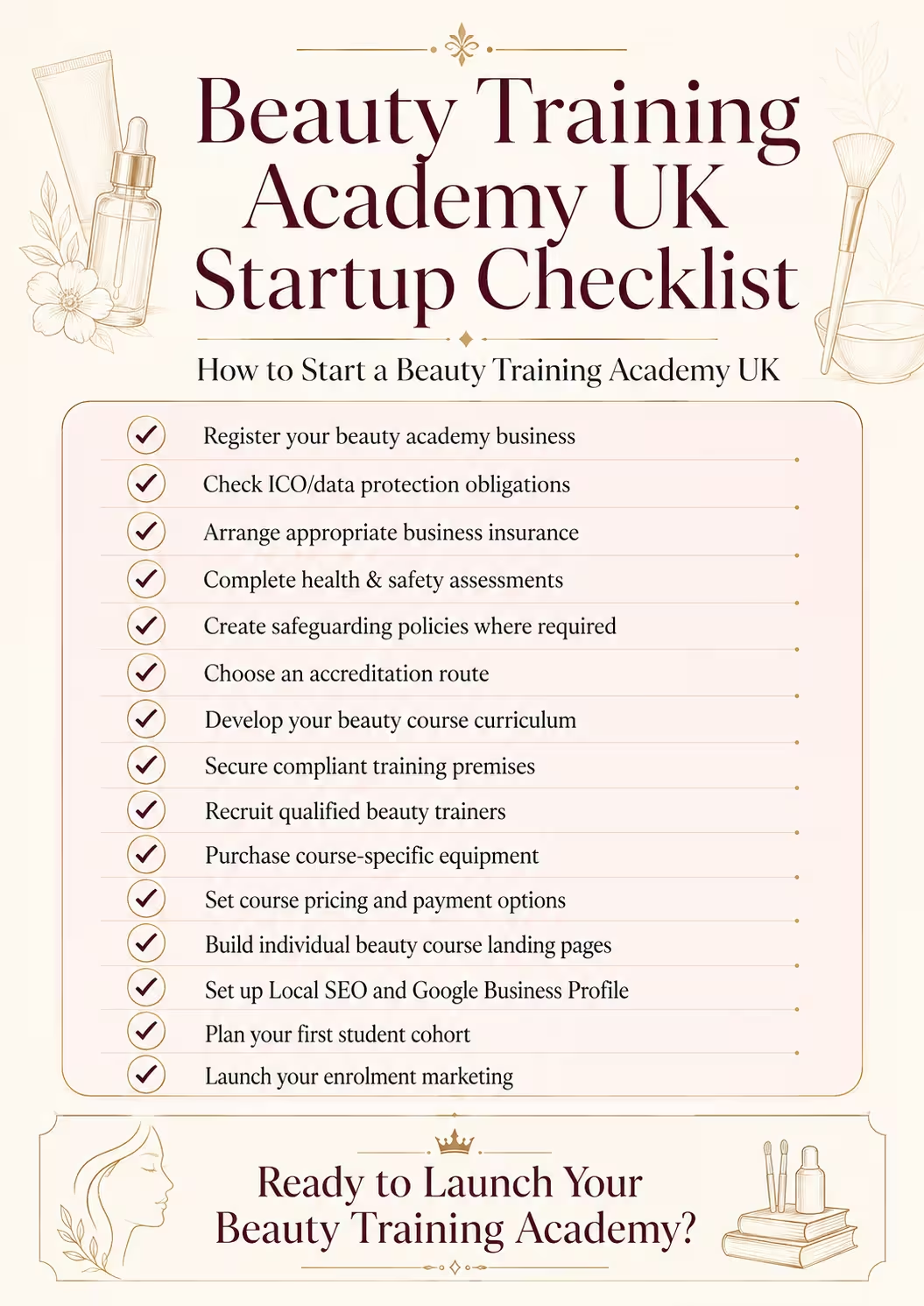
A rough order of operations, start to finish:
- Choose a business structure and register with HMRC or Companies House
- Check your ICO data protection fee obligations and register if required
- Arrange public liability and professional indemnity insurance
- Complete a health and safety risk assessment for treatment spaces
- Draft a safeguarding policy and arrange DBS checks where relevant
- Choose your accreditation route and submit your centre application
- Build a modular curriculum based on real local salon demand
- Secure and fit out premises
- Recruit qualified trainers, including a Level 3 Award in Education and Training or equivalent
- Buy course-specific equipment
- Set pricing, including a payment plan option
- Build a website with a dedicated landing page per course
- Set up local SEO and a Google Business Profile
- Plan your first cohort size, typically six to twelve students
- Launch enrolment and marketing
Getting the Marketing Side Right From the Start
A compliant, well-run academy doesn’t automatically fill seats. That’s usually where founders reach out for outside help, since building a curriculum and building a marketing funnel draw on completely different skill sets. Boost Hive Marketing works with training providers on exactly this: websites built to convert enquiries, local SEO that gets you found for the courses you actually run, and content that positions your academy as the credible option in your area. Get in touch with our team to talk through where your academy stands and what a realistic marketing plan looks like for your launch timeline.
Also Read – How to Market a Beauty Training Academy in the UK
Frequently Asked Questions
1. Do I need a teaching qualification myself to start an academy?
It helps but isn’t always required. Having one yourself, or hiring trainers who do, strengthens your accreditation applications and your credibility with prospective students.
2. How long does it take to get properly accredited?
It varies by awarding body, but budget several months rather than weeks. Rushing this step is one of the most common regrets among founders who’ve been through it.
3. Can I start small and scale later?
Yes, and I’d genuinely recommend it. Many of the most stable academies I’ve come across started with one or two courses and expanded once they had real demand and reviews behind them.
4. How much money do I need to start a beauty training academy in the UK?
There’s no single reliable figure, because it depends on your premises, course mix and accreditation route. What’s fixed is the Companies House incorporation fee if you go limited (currently £100, plus £50 a year for your confirmation statement). Everything else, insurance, fit-out, equipment and accreditation fees, needs a direct quote from your chosen suppliers and awarding body rather than a generic number.
5. Do I need physical premises, or can I train online?
Practical beauty skills generally require in-person, supervised training on real clients, though theory modules and business modules can often be delivered online as a hybrid model.
6. What qualifications should my trainers hold?
Trainers should hold relevant vocational qualifications in the treatments they teach, ideally alongside a teaching or assessing qualification such as a Level 3 Award in Education and Training.
7. How many students should I plan for in my first cohort?
Smaller first cohorts, often six to twelve students, let you iron out operational issues before scaling class sizes up.
8. Do my beauty courses need to be Ofqual-regulated?
No. Not every beauty course needs to lead to an Ofqual-regulated qualification. However, if you want to offer regulated vocational qualifications in England, you will normally need to meet the relevant awarding organisation’s centre-approval and delivery requirements.
9. What insurance do I actually need before opening?
Public liability and professional indemnity insurance are the baseline, with additional cover often required once treatments involve equipment like lasers or injectables.
10. What order should I actually do these steps in?
Legal registration and insurance come first, since almost everything else, from accreditation applications to signing a lease, assumes you’re already a properly registered, insured business. Accreditation and curriculum planning can run side by side after that, followed by premises and staffing, with marketing setup starting a couple of months before you plan to open enrolment.
Also Read – How to Market a Beauty Training Academy in the UK