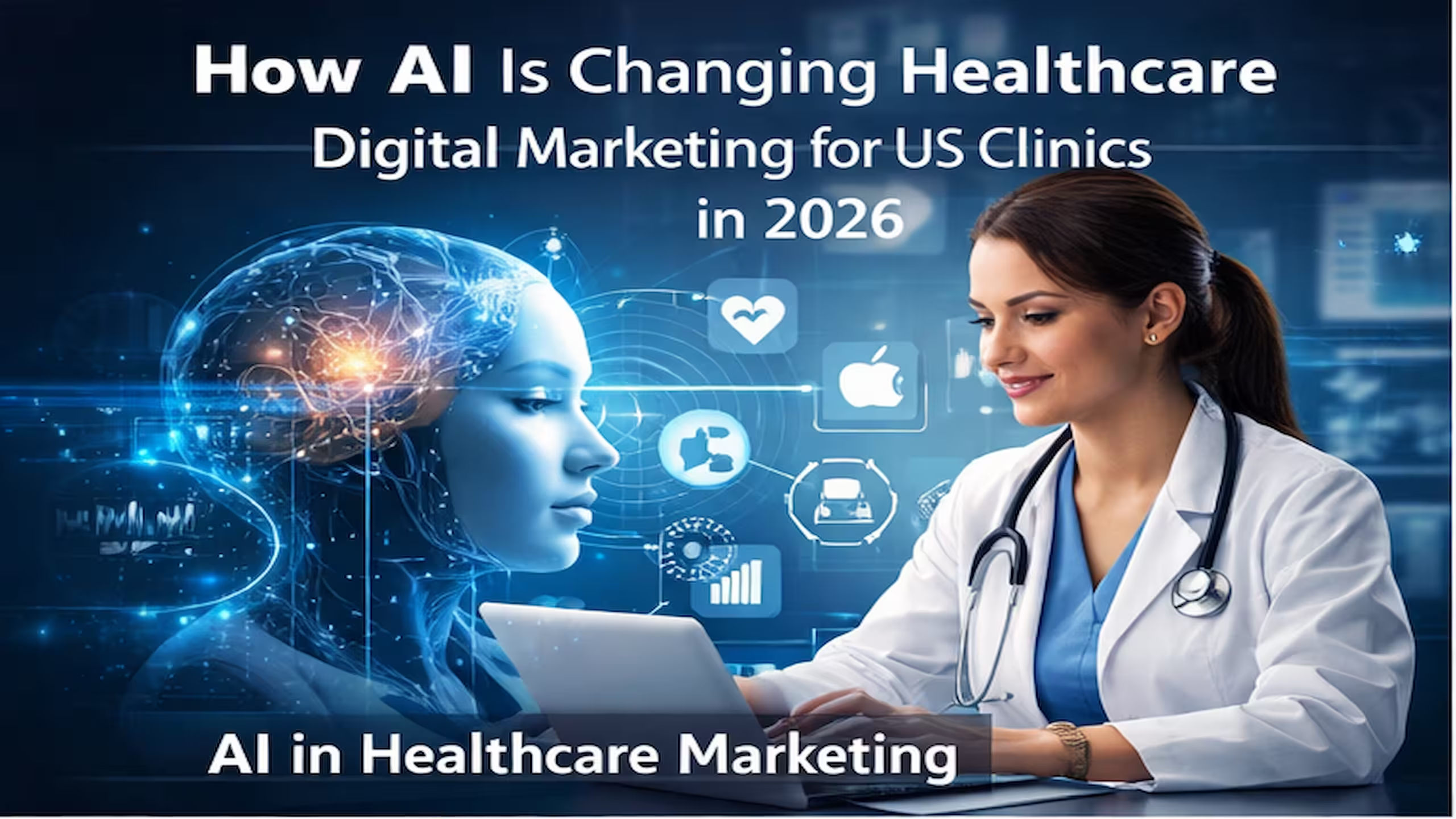
Think about the last time a patient walked into a clinic because they spotted a flyer. In 2026, it almost never happens. A patient wakes up with a health concern, opens Google or asks an AI chatbot, reads reviews, watches a video from a real doctor, and books an appointment. The whole journey takes less than twenty minutes and most of it happens before 9 AM. If your clinic is not present and persuasive at every step of that digital process, you are effectively invisible, and invisible clinics do not fill appointment slots.
At Boost Hive Marketing, we operate as a healthcare digital marketing agency for dental clinics, aesthetic and cosmetic practices, general practice physicians, and multi-specialty hospitals across the United States. Every month we see the gap between clinics that understand how AI has changed patient acquisition and clinics that are still running a 2019 playbook. This blog is written for the ones who want to close that gap.
1. How the Patient Journey Changed and Why AI Is at the Centre of It
For years, digital marketing for doctors meant running a Google Ad, building a basic website, and hoping the right patients found you. That model has broken down. In 2026, over 58% of patients use AI-powered search tools or AI-summarised results to research providers before making contact. Google AI Overviews appear in nearly half of all health-related searches, which means your clinic must be structured as the answer AI trusts, not just a website somewhere on page one.
This shift plays out differently by specialty. For dental clinics, patients are searching hyper-locally. Terms like ‘dental implants near me’ or ‘family dentist accepting new patients in [city]’ are increasingly answered by AI systems that cite specific providers directly in the response. For aesthetic and cosmetic practices, the patient journey is visual and trust-heavy. Patients want to see real results and hear real physicians speak before filling out any form. For multi-specialty hospitals and general practices, digital marketing for doctors now means building credibility across multiple service lines simultaneously so that patients choose you when they are comparing several options at once.
Recognising this is the starting point for any serious healthcare digital marketing agency working in the US in 2026.
2. What AI Actually Changes About Clinic Digital Marketing
Answer Engine Optimisation: Becoming the Trusted Answer
Traditional SEO aimed at ranking in a list of links. Clinic digital marketing in 2026 requires something different: Answer Engine Optimisation, which is the practice of structuring your content so that AI tools like Google AI Overviews, ChatGPT, and Perplexity cite your practice as a credible source when patients ask health questions. When someone asks an AI chatbot which aesthetic clinic in Dallas has the best non-surgical options, the AI is not searching a list. It is pulling from content it has already determined to be accurate and authoritative.
For clinic digital marketing to succeed in this environment, your website needs schema markup that describes your services and providers clearly, a complete and actively managed Google Business Profile, and content built to answer the specific questions patients actually type and speak. A healthcare digital marketing agency that understands Answer Engine Optimisation is worth considerably more to a practice than one still writing keyword-stuffed pages for a search engine that has moved past that approach entirely.
AI-Powered Paid Advertising: Paying for Intent, Not Just Impressions
Google and Meta advertising remain among the fastest paths to new patient appointments for dental clinics and aesthetic practices. But the campaign structure that drives results has changed. AI bidding systems on both platforms now process dozens of real-time signals, including search history, device type, time of day, and prior site engagement, to decide when to show your ad and how much to bid for a given impression.
A properly configured medical advertising agency campaign in 2026 uses these AI bidding systems intentionally, setting patient acquisition cost targets rather than manual bids. For a dental clinic running an implant campaign, an AI-optimised structure routinely achieves two to three times the conversion rate of a manually managed campaign at identical spend. We see this in live account data regularly. The difference between treating your digital marketing partner as a transactional vendor versus treating them as a strategic medical advertising agency is measured in patient volume, not just impressions.
AI Analytics: Connecting Spend to Actual Appointments
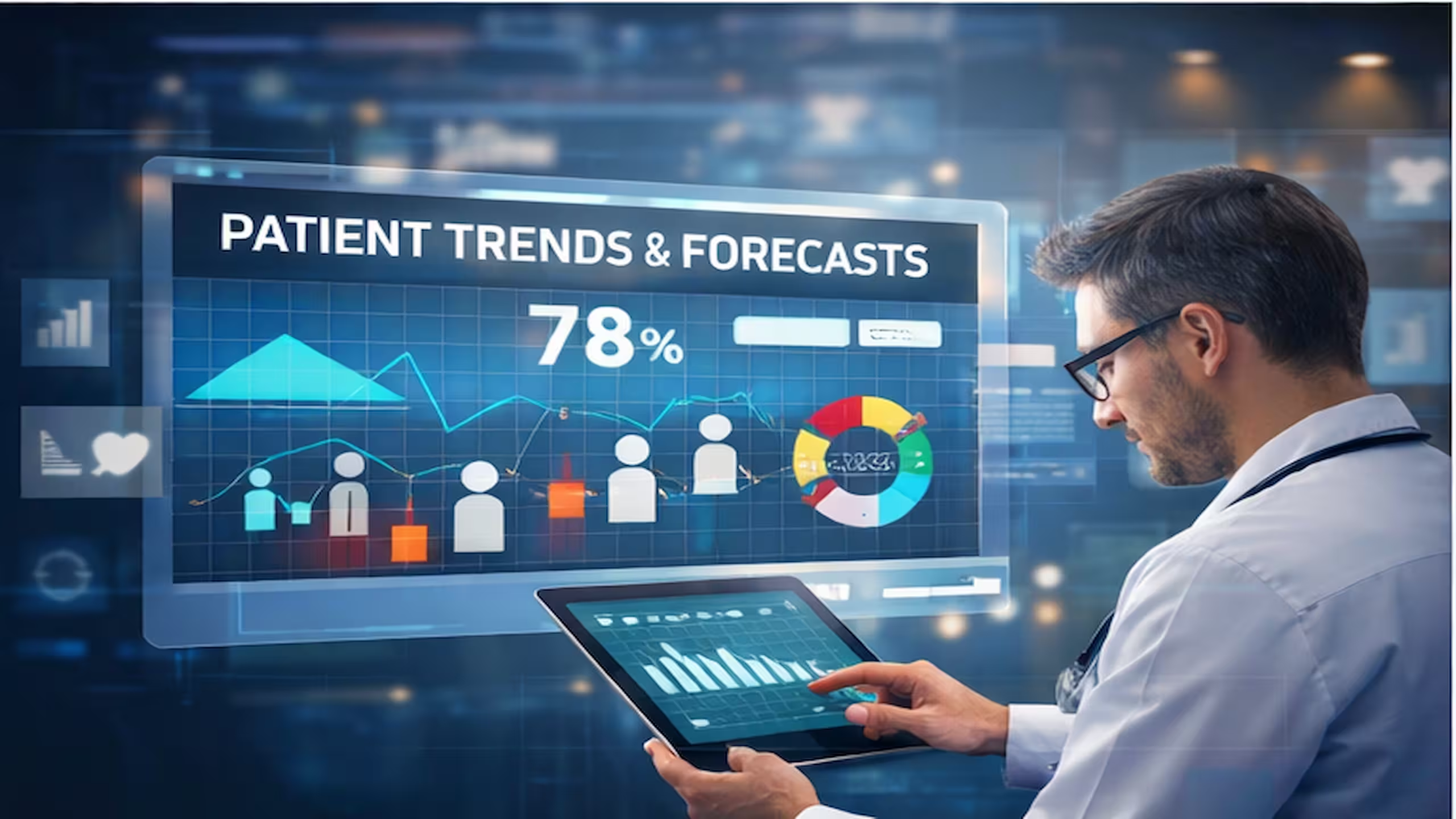
One of the most consistent problems in clinic digital marketing is the inability to trace which marketing activity actually produced a patient. Without that clarity, every budget decision is a guess. AI-enhanced analytics, configured within HIPAA constraints, now allow clinics to connect ad spend, website behaviour, phone calls, and appointment confirmations into a single, reliable picture.
For a multi-specialty hospital running digital marketing for doctors across several departments simultaneously, this capability is transformative. It means allocating budget toward the service lines and patient segments that produce real appointments, rather than spreading spend equally and hoping the numbers hold. This is one of the clearest practical improvements a healthcare digital marketing agency can bring to a clinic relationship in 2026.
3. Reputation Management Is a Core Part of Clinic Digital Marketing Now
One data point defines patient behaviour in 2026: over 90% of patients read online reviews before choosing any provider. Clinics with 200 Google reviews averaging 4.7 stars outperform clinics with 15 reviews at 5.0 in both local search rankings and patient conversion. The volume and recency of reviews signal credibility to AI systems as well as to patients reading them directly.
The best healthcare digital marketing agency approach to reputation is not to ask for reviews manually and hope for the best. It is to build an automated system that sends review requests post-appointment, flags negative feedback immediately for fast response, and produces a consistent monthly increase in review volume without adding work to the front desk. This infrastructure is a standard component of professional clinic digital marketing strategy. Most practices are not doing it systematically, and that gap shows up in their new patient numbers.
4. Short-Form Video Has Become the Fastest Trust-Building Channel in US Healthcare
A patient choosing between two aesthetic practices will watch a sixty-second video from one clinician and never visit the second clinic’s website. Short-form video on Instagram Reels, YouTube Shorts, and TikTok has become the dominant trust medium for US healthcare providers, and the data on why is straightforward: patients evaluate providers emotionally and rationally, and video communicates tone, competence, and humanity in ways that written copy cannot replicate.
For digital marketing for doctors, this means physicians need to be on camera. Not scripted corporate productions. Real clinicians answering questions patients are already searching for. What does recovery look like after a rhinoplasty? How does a family doctor approach a new patient’s first visit? What is a dental implant procedure actually like on the day?
Clinics building a consistent video library are practising clinic digital marketing at its most effective in 2026. They are reaching patients before those patients have even started searching for a provider, building familiarity weeks in advance of a booking decision. Every healthcare digital marketing agency we are aware of that works seriously with US clinics now includes a video content strategy as a core deliverable, not an optional extra.
5. HIPAA Compliance in AI-Powered Marketing: What Every Clinic Must Understand
Standard tracking configurations, including certain Meta Pixel setups and older Google Analytics implementations, can inadvertently collect Protected Health Information when placed on healthcare websites. That is a HIPAA violation regardless of intent, and the financial exposure is significant.
Every campaign Boost Hive Marketing builds for US healthcare clients starts with a compliance audit of the tracking infrastructure. Server-side tracking, consent-based data collection, and carefully scoped conversion events are not advanced technical options. They are the minimum standard for a medical advertising agency operating legally in the US healthcare space. A healthcare digital marketing agency that does not raise HIPAA compliance proactively in its onboarding process is not a safe partner for a US clinic.
The best healthcare digital marketing agency builds compliance into the foundation of every campaign, before a single dollar is spent on advertising.
6. What a Complete Clinic Digital Marketing System Looks Like in 2026
Across the dental, aesthetic, general practice, and multi-specialty segments we serve, the clinics with the most consistent patient growth operate with a common structure:
- A fast, mobile-optimised, HIPAA-compliant website that converts visitors into booked appointments
- A fully built-out Google Business Profile with services, photos, current hours, and actively managed reviews
- Content structured for Answer Engine Optimisation, so AI tools surface your clinic when patients ask relevant questions
- Google Ads and Meta Ads using AI bidding tied to patient acquisition cost targets, not impressions or clicks
- A short-form video content calendar with real clinicians publishing consistently on Reels, Shorts, and TikTok
- Automated reputation management that grows review volume every month without adding front desk work
- HIPAA-compliant analytics connecting every ad dollar to actual confirmed appointments
These elements reinforce each other. SEO rankings improve when reviews and video build the trust signals AI systems look for. Paid ads convert better when landing pages are built for specific patient intent. Analytics reveal which service lines or locations need more attention and which are already performing well. This is what digital marketing for doctors looks like when it is built for 2026 rather than for an earlier era.
Also Read : Healthcare Digital Marketing Company
7. The Gap Between Clinics That Adapt and Those That Do Not Is Growing
US healthcare advertising spend is projected to grow from 22.4 billion dollars to 29.2 billion dollars by 2028. The AI in healthcare market is forecast to reach 56 billion dollars in 2026 alone. Competition for patient attention online is intensifying every quarter. Clinics investing in a structured healthcare digital marketing agency relationship now are compounding an advantage that will be harder and more expensive to close in two or three years.
Clinics still running disconnected campaigns without attribution, without AI-optimised content, and without a reputation strategy are losing patients to competitors who have built these systems, often without understanding clearly why their numbers are drifting.
If you run a dental clinic, an aesthetic practice, a general practice group, or a multi-specialty hospital in the United States and you want to understand where your digital marketing has genuine gaps, Boost Hive Marketing is the healthcare digital marketing agency built to answer that question with data, not guesswork. We focus on one outcome: more patients, acquired at a lower and accountable cost, through a system that is compliant and built to scale. That is what a serious medical advertising agency relationship with a US clinic looks like in 2026.

10 Frequently Asked Questions About AI and Healthcare Digital Marketing
Q1. What does a healthcare digital marketing agency do for a US clinic?
A healthcare digital marketing agency builds and manages the full patient acquisition system: SEO, paid advertising, reputation management, content, and attribution analytics. The objective is to make your clinic visible, trustworthy, and easy to book with across every channel where patients are actively searching for a provider in your specialty.
Q2. How is AI changing digital marketing for doctors in 2026 specifically?
AI changes digital marketing for doctors by shifting how patients discover providers from keyword lists to AI-generated answers. It also improves paid ad performance through intent-based bidding and enables accurate attribution across channels. Doctors who adapt their content and ad strategy to AI systems attract more patients at lower acquisition cost than those who do not.
Q3. Is clinic digital marketing different from regular business marketing?
Yes, considerably. Clinic digital marketing operates under HIPAA, which restricts how patient data is tracked and used in ads. It also requires building clinical trust before a patient will book, which means different content strategy, different creative, and different compliance standards compared to retail, e-commerce, or general service business marketing.
Q4. How long before a clinic digital marketing strategy produces measurable patient growth?
Paid ads typically generate patient enquiries within two to four weeks of a well-configured launch. SEO and reputation building require three to six months before rankings and review volume move meaningfully. A complete clinic digital marketing strategy compounds over six to twelve months, producing the most consistent and cost-efficient patient growth in the second half of year one.
Q5. Why does the best healthcare digital marketing agency emphasise Answer Engine Optimisation?
The best healthcare digital marketing agency focuses on Answer Engine Optimisation because AI tools now answer a growing share of patient health queries directly, without sending patients to a list of links. If your clinic’s content is not structured as a trusted, citable source for AI systems, you lose visibility in the searches that matter most to high-intent patients.
Q6. How is a medical advertising agency different from a general marketing agency?
A medical advertising agency understands HIPAA compliance, clinical trust-building, and healthcare-specific patient behaviour. A general agency typically lacks the compliance infrastructure to run healthcare ads safely, the sector-specific creative knowledge to build patient trust, and the attribution setup needed to connect ad spend to actual booked appointments accurately.
Q7. What makes a medical advertising agency HIPAA compliant for US clinics?
A compliant medical advertising agency uses server-side tracking to avoid exposing Protected Health Information, implements consent-based data collection across all campaign touchpoints, and configures conversion events that do not pass patient-identifiable data to ad platforms. Compliance is an operational discipline embedded in setup, not a feature added on request after launch.
Q8. Can a small general practice compete against larger clinics through digital marketing for doctors?
Yes, and often effectively. Digital marketing for doctors at smaller practices can dominate local search for specific neighbourhoods and patient demographics where larger hospitals publish generic, unfocused content. A well-configured local SEO profile, consistent review management, and physician-led short-form video can outperform much larger advertising budgets in a targeted geographic area.
Q9. Why is short-form video now a core part of clinic digital marketing for all specialties?
Short-form video is the highest-trust content format available for clinic digital marketing because it shows real clinicians speaking plainly about patient concerns. Patients evaluating providers make emotional as well as rational decisions, and video communicates competence, empathy, and personality in ways that written copy alone cannot replicate across dental, aesthetic, general practice, or hospital specialties.
Q10. What should a clinic look for when choosing the best healthcare digital marketing agency?
When choosing the best healthcare digital marketing agency, look for documented healthcare-specific case results, built-in HIPAA compliance across every campaign, analytics reporting tied to patient acquisition cost rather than impressions, and a clear methodology for connecting marketing activity to confirmed appointments. The best healthcare digital marketing agency produces measurable patient growth, not just campaign activity reports.
Also Read : Healthcare Digital Marketing Company